It’s great to be back in New York City for a few days. Yesterday Tom Jaffee and I spoke to a packed house of restaurant owners about creative strategies for social media. I enjoy spending time talking to people in industries other than dating. Immersing ones self into different industries is invaluable in terms of broadening my perspective and ability to problem-solve. Plus, the food at the show was excellent.
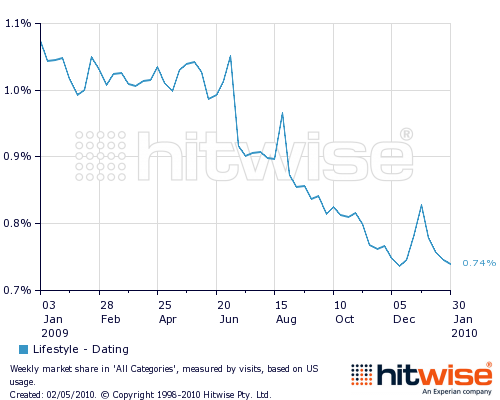 The Online Dating Recession, as told by paidContent:
comScore (NSDQ: SCOR) figures show double-digit year-over-year declines in unique visitors worldwide at big paid subscriber sites like Yahoo (NSDQ: YHOO) Personals (down 34 percent), Match.com (down 37 percent), and Singlesnet (down 27 percent). Notable exceptions include eHarmony (up 31 percent), social dating site Zoosk (which has very impressively seen its traffic surpass that of Match and Singlesnet in the U.S.) and PlentyOfFish (up 26 percent), which happens to be the only free site among the top ten.
This backs up not only my conviction that the recession was good to a few dating sites and the rest suffered mightily but the fact that online dating needs to clean up it’s act and become more effective if it wants to enjoy any sort of industry-wide growth.
Upstarts like Zoosk (and let’s not forget Are You Interested, the lesser-known Zoosk Rival), have made serious inroads into the online dating industry, although their casual nature just means they have to spent insane amounts of money to drive fickle traffic. When Zoosk reduces it’s current marketing spend it’s numbers are going to drop off, and to make it worse,
Smartdate secures €2m so you can date friends of your Facebook friends. Smartdate was founded by Fabrice Le Parc, who also launched be2.com. Story at TechCrunch, thanks to Nick Tsinonis.
Surprised the author didn’t mention Thread or Gelato, which, while much smaller than Zoosk, are more closely aligned with the concept of your dating network being comprised of your social graph (friends of friends and so on.)
We’ll have to see how the “pay as you go” pricing model works out. People are not used to paying for services based on Facebook for the most part.
Grindr’s Innovative Paywall: In A Nightclub, A Phone And a Hookup, I talked about using location-based services to identify single people in a Boston nightclub. While using Grindr with a friend, I found that the service has a new type of freemium offering. To fill the need of Grindr users who want even more access to guys nearby—there is now a premium (extra) version for only $2.99 a month. Grindr X(tra) lets users see up to 200 more guys who are close-by (100 more than the free version allows) and it’s ad free.
I’ll be talking with Grindr soon about their business and mobile success.
Dan Ariely’s Predictably Irrational Blog. Dan has done research on virtual dating with Omnidate. This post made me lol. What Husbands and Wives Search for on Google.
VisualDNA has a new partner, 12like.com.